The Future of Money: Why the Way We Pay Is Fundamentally Changing
A Look at the Next Generation of Payments
When was the last time you paid with cash? A week ago? A month ago? Perhaps you can’t even remember.
For many people, paying has become such a routine part of daily life that they rarely stop to think about it. A smartphone, a payment card, or a single click is often all it takes. Yet while our everyday habits have evolved, money itself is undergoing a transformation.
The key question is: How will we pay ten years from now?
From Cash to a Digital Economy
For decades, cash was the dominant form of payment. It was simple, direct, and independent of technology. Today, however, the reality looks very different.
E-commerce, digital services, international business relationships, and mobile applications have fundamentally reshaped the requirements of modern payment systems.
Consumers now expect:
Instant transactions
Digital accessibility
Global usability
Transparent costs
High levels of security
At the same time, cash usage continues to decline in many countries around the world.
The trend is clear: money is becoming increasingly digital.
Why Financial Infrastructure Must Evolve
The modern world is more interconnected than ever before. Information moves across continents in seconds. Businesses operate globally, and individuals increasingly live, work, invest, and transact across borders. Yet many financial systems still rely on infrastructures designed decades ago.
As a result, challenges remain:
Slow international transfers
High transaction costs
Complex processes
Fragmented national systems
Limited availability outside traditional banking hours
While technology continues to advance at an unprecedented pace, many financial infrastructures are still struggling to meet the demands of an increasingly digital economy.
New Technologies Are Reshaping Payments
The good news is that the technological foundation for modern payment systems already exists.
Blockchain technologies, digital financial platforms, and next-generation payment networks are enabling real-time transactions that operate around the clock and across geographical boundaries.
At the same time, governments, central banks, and private enterprises are actively exploring new forms of digital money.
These developments include:
Central Bank Digital Currencies (CBDCs)
Blockchain-based payment systems
Digital assets
New global financial platforms
Not every innovation will achieve widespread adoption. However, the direction of travel is unmistakable: payments are becoming faster, more digital, and increasingly interconnected.
What Consumers Actually Want
Technology alone does not solve problems. Ultimately, success depends on meeting the needs of people.
Most consumers are not looking for complex financial products. They simply want to:
Pay quickly and conveniently
Minimize fees
Keep their money secure
Make international payments effortlessly
Access their finances whenever they need to
Organizations that successfully address these expectations will help shape the future of finance.
The Role of Emerging Financial Platforms
This is precisely why a new generation of financial solutions is emerging worldwide, combining traditional banking services with modern technologies.
Smart Energy Pay follows a similar vision by bringing together digital banking, advanced payment technologies, and global accessibility to create financial services that are simpler, more transparent, and more inclusive.
The objective is not to replace existing systems overnight. Rather, the future is likely to be built on a combination of established financial structures and innovative digital technologies working together.
The Future Has Already Arrived
The future of money is often discussed as though it were still decades away. In reality, we are already experiencing its impact today.
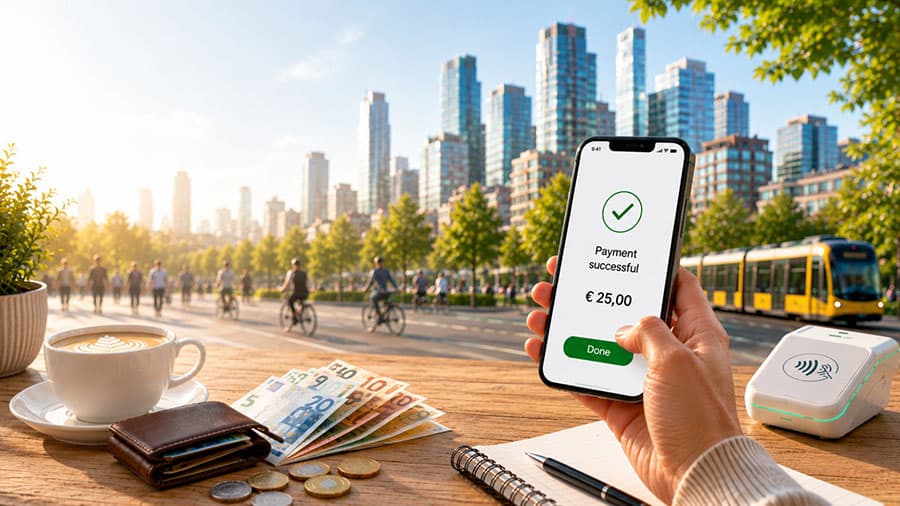
Contactless payments, mobile wallets, digital financial platforms, and innovative payment technologies have fundamentally changed the way we manage money. The most significant shift is that money is becoming increasingly digital, global, and instantly accessible.
Not overnight. But step by step.
Conclusion: Money Will Become More Digital, Faster, and More Global
The future of money will not be defined by a single technology. Instead, a new financial ecosystem is emerging—one that combines digital innovation, global connectivity, and modern infrastructure.
For consumers, this means greater convenience, increased transparency, and faster financial services. For businesses, it creates new opportunities to engage with international markets more efficiently.
The real question is no longer whether the way we pay will change. The question is: How quickly will we adapt to this new reality?