How to Spot Crypto Scams: Seven Warning Signs of Fake Platforms and Online Fraud
Phishing, identity theft and fraudulent investment offers: How to identify fake websites and protect your digital assets.
A professionally designed website, a familiar company logo and an apparently legitimate investment opportunity: At first glance, it can be difficult to tell whether an offer comes from a trustworthy provider or a scammer.
Cybercriminals use fake trading platforms, deceptive web addresses and convincing messages to steal personal information, login credentials or cryptocurrencies. They do not necessarily need to bypass technical security systems. Often, they simply manipulate users into voluntarily sharing sensitive information or authorizing a transaction.
The consequences can be particularly serious in the crypto sector. Once a blockchain transaction has been confirmed, it generally cannot be reversed.
However, many scams follow recognizable patterns. Understanding these warning signs can help users identify suspicious offers early and significantly reduce their exposure to fraud.
Why Are Fake Crypto Platforms So Dangerous?
Digital financial services are increasingly accessed through websites and mobile applications. While this makes cryptocurrencies and other digital assets more accessible, it also creates opportunities for fraudsters.
One common tactic is brand impersonation. Criminals copy the appearance of established companies, including their logos, colors, website layouts and sometimes even their customer communications.
A fraudulent platform may look so similar to the genuine service that users struggle to recognize the difference.
Scammers typically pursue one of three objectives:
Stealing login credentials: Users are directed to a fake login page.
Stealing cryptocurrencies: Victims are persuaded to transfer digital assets to fraudulent wallet addresses.
Collecting personal information: Identity documents, contact details or other sensitive information are requested under false pretenses.
The objective is not always immediate financial theft. Stolen information may also be used in subsequent fraud attempts.
Seven Warning Signs Everyone Should Know
1. The Website Address Looks Almost Right
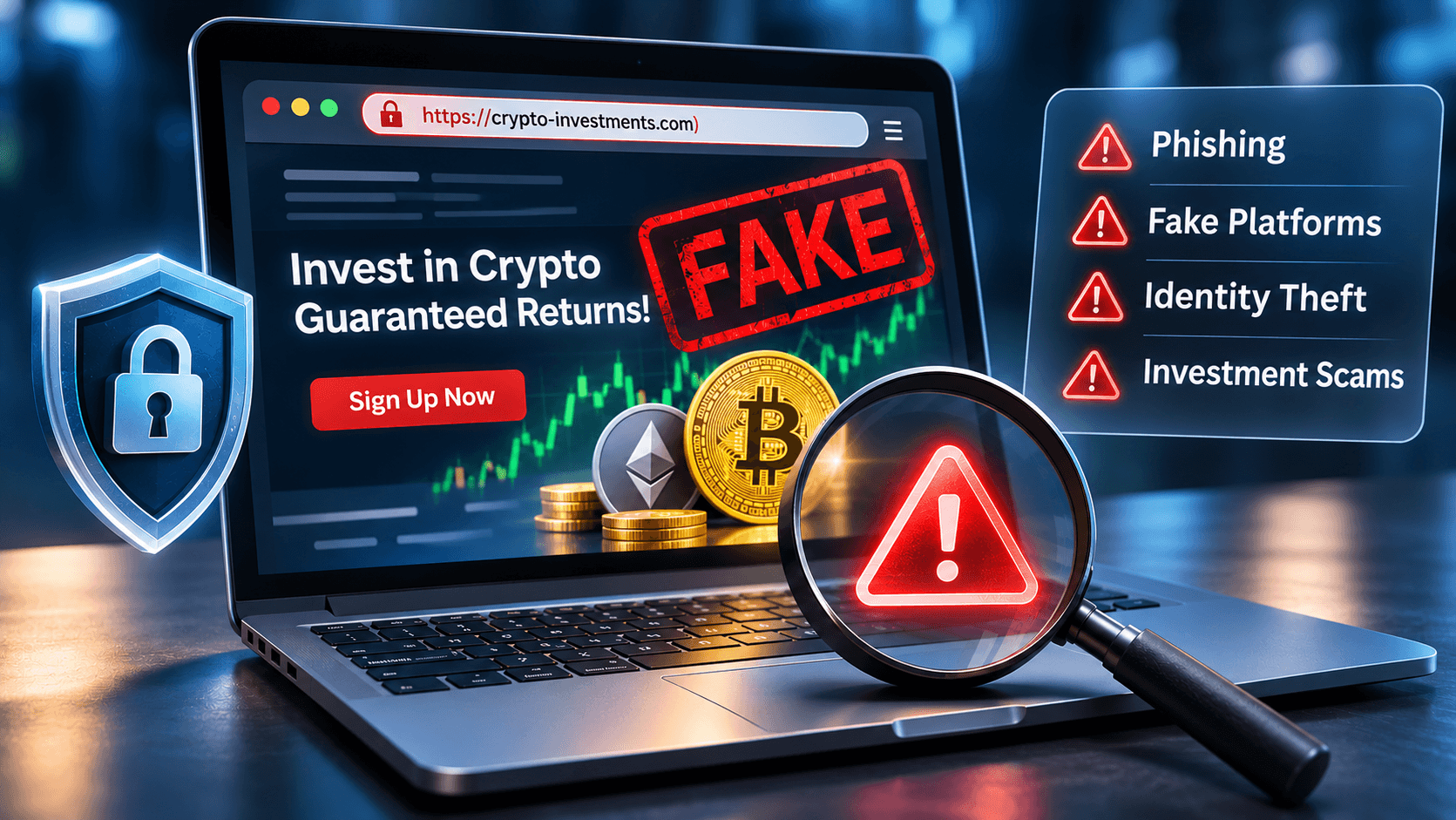
One of the most common techniques is known as typosquatting. Scammers register domain names that closely resemble those of legitimate companies.
Sometimes, a single additional letter, hyphen or different domain extension is enough to deceive visitors.
What makes this particularly dangerous is that the fake website may reproduce the original platform's appearance almost perfectly.
What users should do: Carefully check website addresses and access familiar financial platforms through saved bookmarks or manually entered URLs whenever possible. An HTTPS padlock does not, by itself, prove that a website is legitimate.
2. Unusually High or Guaranteed Returns
“Guaranteed profits,” “risk-free investments” or “daily returns” are classic warning signs of potentially fraudulent financial offers.
Cryptocurrencies can experience significant price fluctuations. Even established digital assets do not offer guaranteed profits.
Offers become particularly suspicious when providers promise extraordinary returns without clearly explaining how those returns are supposed to be generated.
General rule: The higher the promised return and the lower the claimed risk, the more carefully the offer should be examined.
3. Fake Support Representatives Request Sensitive Information
A message claims that an account has been suspended, a transaction needs confirmation or an urgent security verification is required.
A supposed support representative then asks the user to provide login credentials, authentication codes or a wallet recovery phrase.
This is a major warning sign.
A seed phrase allows users to recover access to many self-custodial cryptocurrency wallets. Anyone who obtains it may be able to take full control of the associated digital assets.
Important: Never share seed phrases or private keys with anyone, including individuals claiming to represent customer support.
4. Messages Create Artificial Urgency
“Your account will be suspended within one hour.”
“You must verify your wallet immediately.”
“Today is your last chance to secure your funds.”
These messages are designed to create pressure and discourage users from verifying whether a request is genuine.
Scammers frequently distribute them through email, text messages, messaging applications and social media. Sender names and company logos can also be forged.
Safer approach: Avoid clicking links in suspicious messages. Instead, contact the provider through its established official channels.
5. Withdrawals Require Unexpected Additional Payments
A particularly common fraud pattern involves fake investment platforms.
Initially, users see an apparently growing account balance. In some cases, scammers even allow small withdrawals to establish trust.
However, when victims attempt to withdraw larger amounts, the platform suddenly demands additional payments for supposed taxes, security checks or account activation.
Such demands are a serious warning sign.
Important: Anyone who has already lost money should avoid making further payments simply to unlock supposed profits or recover an account balance.
6. Unknown Contacts Suddenly Recommend Crypto Investments
Not every scam begins with a fraudulent website.
Criminals frequently approach potential victims through social media, messaging services or dating platforms. They may spend days or weeks building trust before recommending a supposedly profitable investment platform.
Some present themselves as financial experts. Others first establish a personal or romantic relationship.
The objective is similar: Convince victims to transfer money or cryptocurrencies to a platform controlled by the scammers.
Warning sign: An unfamiliar person pressures you to make a particular investment or offers unsolicited assistance with wallet transactions.
7. Company Information and Regulatory Status Are Unclear
Legitimate financial service providers should offer transparent information about their business, services and applicable regulatory requirements.
Missing contact details, inconsistent corporate information or unsupported claims about government authorization should therefore be treated with caution.
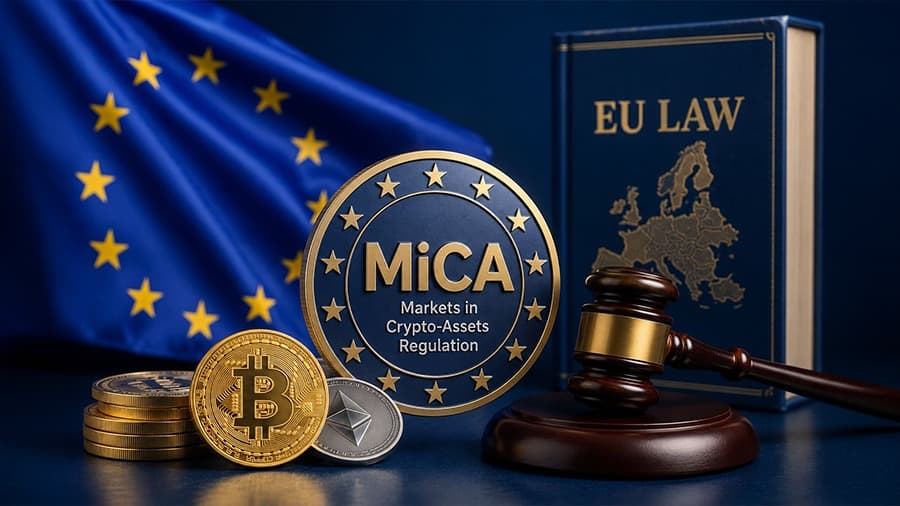
In the European Union, the Markets in Crypto-Assets Regulation (MiCA) establishes a common regulatory framework for certain crypto-assets and crypto-asset services.
The European Securities and Markets Authority (ESMA) maintains a public register that users can consult to check information about authorized crypto-asset service providers.
However, regulatory authorization does not mean that an investment is risk-free. Transitional arrangements and differences in regulatory responsibilities must also be taken into account.
How to Check a Crypto Platform Before Signing Up
Not every scam is immediately obvious. However, a short verification process can help users avoid many common risks.
Essential security questions:
Does the website address exactly match the provider's official domain?
Are the company's identity and contact details transparent and verifiable?
Can regulatory claims be checked through official registers?
Does the platform promise unusually high profits or guaranteed returns?
Is anyone requesting passwords, authentication codes or a seed phrase?
Are you being pressured to transfer money or cryptocurrencies immediately?
Are there independent reports of fraudulent activity or impersonation websites?
If several of these questions raise concerns, users should avoid making transactions until the uncertainties have been resolved.
What Should You Do If You Suspect a Crypto Scam?
Anyone who discovers a suspicious website or has already disclosed personal information should act as quickly as possible.
1. Stop making further payments
Do not make additional transfers for supposed account activation fees, taxes or security charges without independently verifying the request.
2. Secure your accounts
Change passwords, enable multi-factor authentication and review active sessions. If the same password has been used elsewhere, secure those accounts as well.
3. Check your wallet security
If a seed phrase has been disclosed, the affected wallet must be considered compromised. Any remaining assets should, where safely possible, be transferred to a newly created wallet with a new recovery phrase.
4. Preserve evidence
Document suspicious URLs, messages, wallet addresses, transaction identifiers and payment receipts.
5. Report the incident
Contact the legitimate service provider where appropriate and consider filing a report with the police or relevant authorities.
Users should also be cautious of so-called recovery scams. In these schemes, fraudsters demand upfront payments while promising to recover previously stolen cryptocurrencies.
Why Digital Security Requires More Than Technology
Modern financial platforms invest in technical safeguards, secure account access and monitoring systems designed to detect suspicious activity.
However, even extensive security measures cannot prevent criminals from imitating established brands or targeting users outside a platform's own infrastructure.
This is why education about phishing, identity theft and fraudulent websites is an important part of responsible digital financial services.
For providers such as Smart Energy Pays, which bring payment functionality and digital assets together within a broader ecosystem, helping users recognize potential threats is an important element of security awareness.
Technology can reduce risks. Nevertheless, informed and attentive users remain an essential line of defense.
Conclusion: Verify First, Act Second
Fake cryptocurrency platforms are becoming increasingly sophisticated. Scammers copy familiar brands, impersonate customer support representatives and use psychological pressure to obtain money or sensitive information.
The most important protective measures are straightforward: Verify website addresses, question unrealistic promises and keep confidential wallet information secure.
Taking the time to investigate suspicious offers and avoiding rushed decisions can significantly reduce exposure to common fraud schemes.
The most important rule: Never act under pressure, and never disclose private keys or recovery phrases.
FAQ: Frequently Asked Questions About Crypto Scams
How can I recognize a fake crypto website?
Common warning signs include suspicious domain names, missing company information, unrealistic profit promises and requests for sensitive information. A professional website design alone does not establish legitimacy.
Can a fake website have a valid HTTPS certificate?
Yes. HTTPS indicates that the connection is encrypted. It does not guarantee that the website operator is trustworthy.
Can a confirmed cryptocurrency transaction be reversed?
Generally, no. Recovering transferred assets can be difficult and is never guaranteed. In certain circumstances, law enforcement authorities or relevant service providers may be able to assist.
What should I do if I have shared my seed phrase?
Treat the affected wallet as compromised. Any remaining assets should, where safely possible, be moved immediately to a newly created wallet with a new recovery phrase.
Are regulated crypto platforms automatically safe?
No. Regulation may establish requirements for service providers and consumer protection, but it does not eliminate market risks, fraud or all security threats.
Disclaimer: This article is provided for general informational purposes only and does not constitute investment advice or individualized legal advice. Cryptocurrencies and digital assets may involve significant risks.