Warum internationale Überweisungen im Jahr 2026 immer noch zu teuer sind
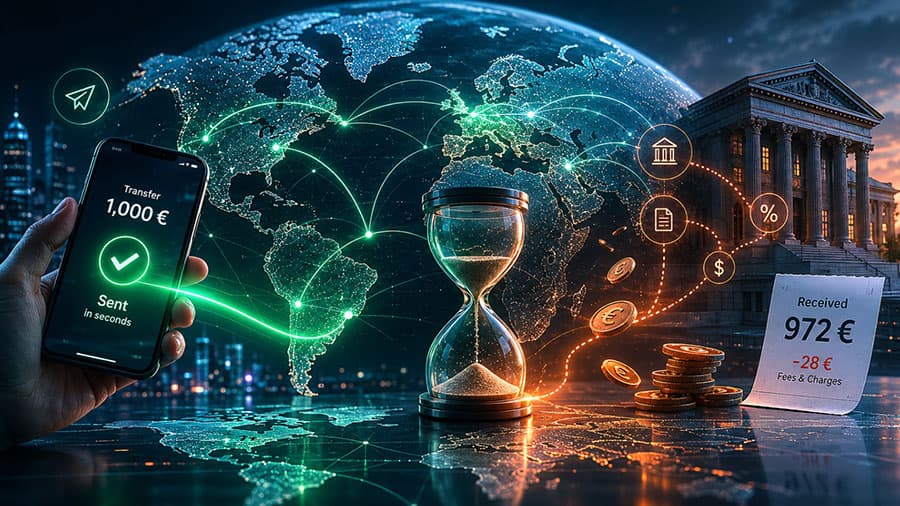
Du überweist 1.000 Euro ins Ausland. Wenige Sekunden später erhältst du die Bestätigung: „Überweisung erfolgreich.“
Doch das Geld kommt erst Tage später an. Und beim Empfänger landet oft weniger als ursprünglich abgeschickt wurde. Gebühren, Wechselkursaufschläge und verschiedene Zwischenbanken haben ihren Anteil genommen.
Warum funktioniert internationaler Zahlungsverkehr im Jahr 2026 immer noch so?
Wir leben in einer Zeit, in der Nachrichten innerhalb von Sekunden um die Welt gehen, Videokonferenzen Menschen auf verschiedenen Kontinenten verbinden und digitale Technologien ganze Industrien verändern.
Doch ausgerechnet bei internationalen Geldtransfers scheint die Zeit vielerorts stehen geblieben zu sein. Wer heute Geld von Europa in die USA, nach Asien oder in andere Regionen der Welt senden möchte, sieht sich häufig mit einer Vielzahl von Gebühren, langen Bearbeitungszeiten und intransparenten Wechselkursen konfrontiert.
Eine Welt voller Unsicherheit
Die vergangenen Jahre waren geprägt von tiefgreifenden Veränderungen.
Hohe Inflation in vielen Ländern
Geopolitische Spannungen
Neue Handels- und Zollkonflikte
Diskussionen über digitale Zentralbankwährungen (CBDCs)
Bankenkrisen und Vertrauensverluste
Schwankende Wechselkurse
Gleichzeitig wächst die Zahl der Menschen und Unternehmen, die international arbeiten, investieren oder Geschäfte tätigen. Noch nie war die Welt so vernetzt. Noch nie war der Bedarf an schnellen, kostengünstigen und sicheren grenzüberschreitenden Zahlungen so groß.
Die versteckten Kosten internationaler Überweisungen
Viele Verbraucher achten lediglich auf die ausgewiesene Überweisungsgebühr. Die tatsächlichen Kosten liegen jedoch häufig deutlich höher.
Zusätzliche Belastungen entstehen oft durch:
Wechselkursaufschläge
Korrespondenzbanken
Bearbeitungsgebühren
Empfängergebühren
Verzögerungen von mehreren Tagen
Insbesondere kleinere Unternehmen, Selbstständige und international tätige Dienstleister spüren diese Kosten unmittelbar. Jede unnötige Gebühr reduziert die Wettbewerbsfähigkeit, belastet die Liquidität und schmälert den tatsächlichen Wert einer Transaktion.
Wenn jeder Euro zählt
Auch in Deutschland hat sich die Wahrnehmung vieler Menschen verändert. Steigende Lebenshaltungskosten, hohe Energiepreise und eine schwächere Wirtschaftsdynamik führen dazu, dass Verbraucher und Unternehmen genauer hinschauen, wenn es um ihr Geld geht.
Immer häufiger stellen sich Fragen wie:
Wie sicher sind meine Ersparnisse?
Wie hoch sind die tatsächlichen Kosten von Finanzdienstleistungen?
Warum dauern internationale Überweisungen immer noch so lange?
Welche Alternativen gibt es zu traditionellen Strukturen?
Das Vertrauen in bestehende Systeme wird kritischer hinterfragt als noch vor wenigen Jahren.
Die Technologie ist längst vorhanden
Interessanterweise liegt das Problem nicht an fehlender Technologie. Blockchain-Netzwerke, moderne Zahlungsplattformen und digitale Finanzinfrastrukturen ermöglichen heute nahezu sofortige Transaktionen – rund um die Uhr und über Ländergrenzen hinweg.
Die eigentliche Herausforderung liegt häufig in bestehenden Strukturen, regulatorischen Anforderungen und historisch gewachsenen Systemen.
Viele Prozesse wurden entwickelt, als internationale Zahlungen noch eine Ausnahme waren. Heute sind sie Alltag.
Die Zukunft gehört effizienteren Lösungen
Genau deshalb entstehen weltweit neue digitale Finanzinfrastrukturen, die internationale Zahlungen schneller, transparenter und effizienter gestalten sollen.
Auch Smart Energy Pay verfolgt diesen Ansatz. Ziel ist es, moderne Zahlungstechnologien, digitales Banking und globale Verfügbarkeit miteinander zu verbinden, um grenzüberschreitende Transaktionen einfacher und nutzerfreundlicher zu machen.
Dabei geht es nicht darum, bestehende Systeme von heute auf morgen zu ersetzen. Vielmehr zeigt sich, dass Verbraucher und Unternehmen zunehmend Lösungen erwarten, die sich an den Möglichkeiten moderner Technologien orientieren – und nicht an den Grenzen vergangener Jahrzehnte.
Kunden erwarten heute:
Transparenz
Geschwindigkeit
geringe Kosten
weltweite Verfügbarkeit
digitale Zugänglichkeit
Unternehmen und Finanzplattformen, die diese Anforderungen erfüllen, werden in den kommenden Jahren erheblich an Bedeutung gewinnen.
Die zentrale Frage lautet daher nicht mehr, ob sich internationale Zahlungen verändern werden. Die eigentliche Frage lautet: Wer wird die Finanzinfrastruktur der nächsten Generation bereitstellen?
Fazit: Der Wandel hat längst begonnen
Internationale Überweisungen gehören für Millionen Menschen und Unternehmen längst zum Alltag. Dennoch basieren viele Prozesse noch immer auf Strukturen, die aus einer anderen Zeit stammen.
Während sich Kommunikation, Handel und Technologie in den vergangenen Jahren rasant entwickelt haben, hinkt der grenzüberschreitende Zahlungsverkehr vielerorts hinterher.
Fest steht: Verbraucher und Unternehmen weltweit verlangen nach schnelleren, günstigeren und transparenteren Lösungen. Und dieser Wandel hat längst begonnen.